See active work together
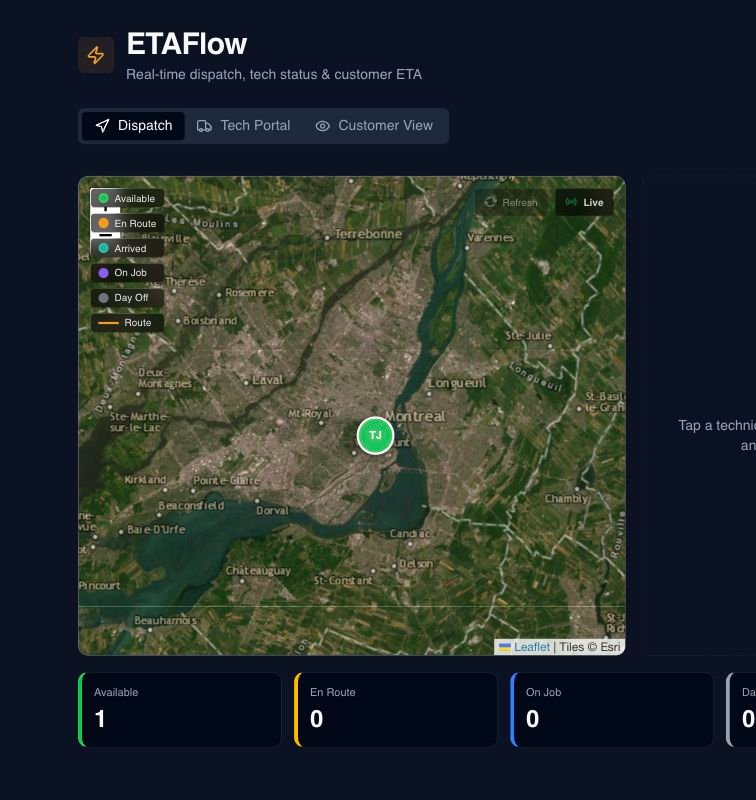
The office can review active jobs in a list and map without piecing together separate messages.
Make arrival status clear
ETAFlow combines active-job status, mapped destinations, route-based travel estimates and secure customer links without claiming continuous technician location tracking.
What is already in the product
The office can review active jobs in a list and map without piecing together separate messages.
Technicians update the operational step so the office knows whether work is dispatched, underway or complete.
Google Routes supports travel estimates, with a fallback when the external route result is unavailable.
The owner chooses the latest-arrival buffer used to flag a possible delay.
A secure token link lets the customer check the current status and ETA information prepared for the job.
Potential delays can be reflected in the operational view and the configured customer communication flow.
How the handoff works
Every major workflow answers the same five questions: what starts it, which rules apply, what Serberus completes, when it asks, and where the result remains visible.
An assigned job approaches its service time and the technician updates its status.
You set the arrival buffer and decide which status notices customers receive.
Serberus prepares route-based ETA information, updates the active-job view and maintains the secure status link.
It asks when a delay or schedule change requires a new customer commitment.
See it in ETAFlow, the job status history and the customer's secure tracking page.

From office to field
The same request, schedule, customer details, photos, notes, status, and next action stay available as work moves from the office to the site.
Real product screen
This image comes from the current Serberus application. Interface details may evolve, but the workflow shown here is part of the product surface audited for this site.
Serberus
Serberus does the heavy lifting, brings the exceptions back to you, and keeps the result visible.